The First 10 Minutes: What Guests Notice Before They Ever Order
By Pop Reso
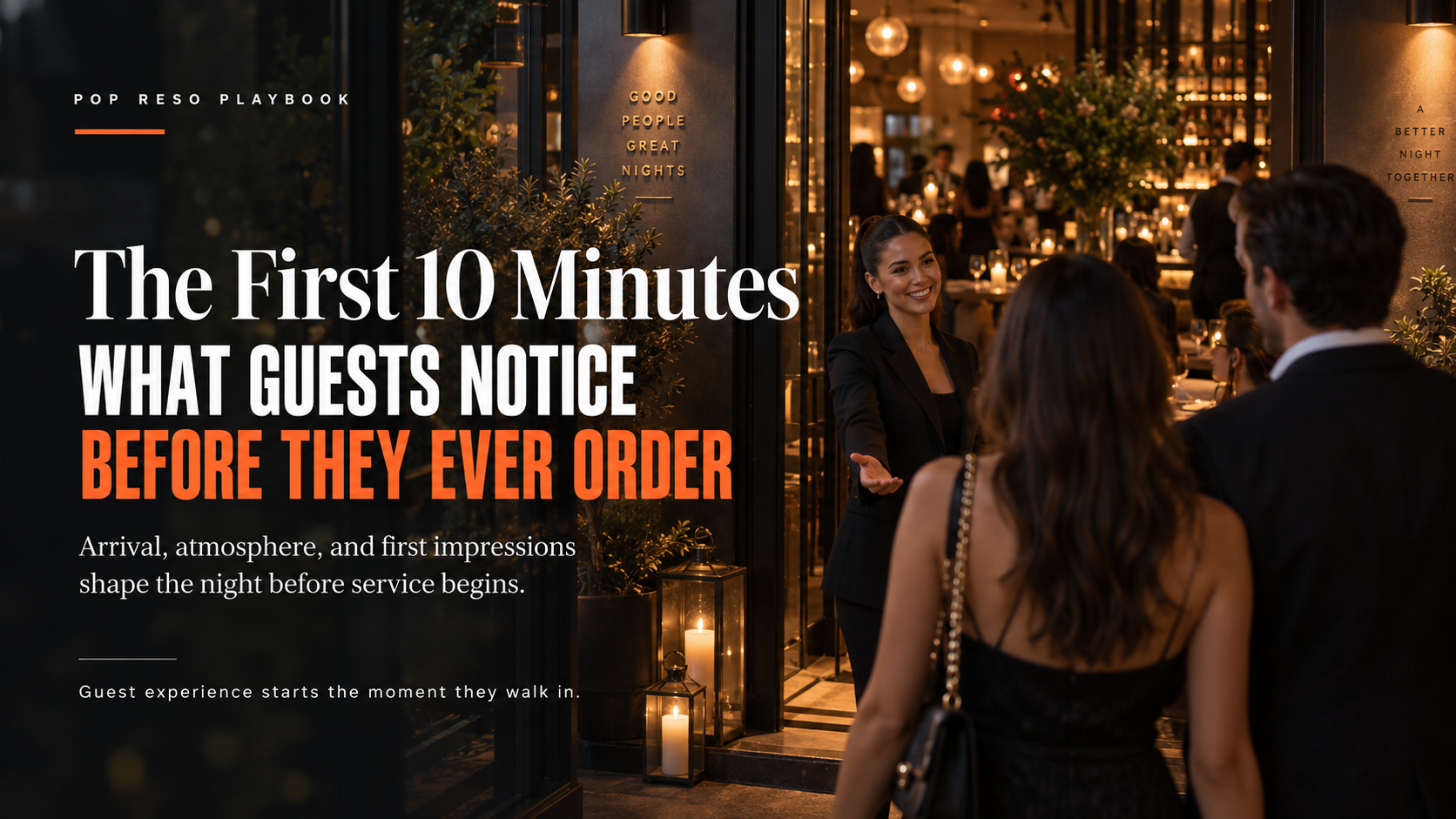
Guests start deciding how they feel about a venue before they ever order.
The first ten minutes inside a venue carry more weight than most people realize.
A guest walks through the door, looks around, gets greeted, waits to be seated, notices the music, takes in the lighting, watches the staff, scans the room, and begins building an impression almost immediately.
None of this requires a menu.
Before the first drink is ordered, guests are already asking themselves a series of quiet questions. Does this place feel welcoming? Does it feel organized? Does it feel busy in a good way? Does the staff seem happy to be here? Did we make the right choice?
Those impressions do not arrive one at a time. They blend together, and by the time a server reaches the table, the guest may already feel relaxed and excited or slightly unsure.
That is why the beginning of the experience deserves just as much attention as what happens later.
The Entrance Sets the Mood
Every venue has an arrival moment, even if no one has intentionally designed one.
Sometimes it is a host at the door. Sometimes it is a bartender looking up and saying hello. Sometimes it is simply the way the room opens up when someone walks inside.
What matters most is acknowledgment.
Guests do not necessarily expect to be seated instantly, but they want to know someone has seen them. A quick smile, eye contact, or “we’ll be right with you” can completely change how a short wait feels.
Without that acknowledgment, thirty seconds can feel much longer.
This matters especially when the venue is busy. Staff may be doing everything right operationally, but from the guest’s perspective, being left standing at the entrance without any recognition can make the entire room feel less welcoming.
Hospitality begins with the simple feeling that someone noticed you arrived.
Guests Read the Room Faster Than You Think
Once inside, people take in the atmosphere almost instantly.
They notice whether the room feels warm or flat. They notice whether the music fits the space. They notice whether the lighting feels intentional. They notice whether people seem comfortable and whether staff are moving with purpose.
They may not consciously think, “The lighting is too bright,” or “The room feels scattered,” but they feel the result.
A guest entering a venue with warm lighting, active staff, a little conversation in the air, and a few occupied tables grouped naturally together receives an immediate message: this feels like a good place to spend the evening.
That impression creates momentum.
It also works the other way. A silent room, harsh lighting, empty tables dominating the view, and staff clustered near a service station can make a venue feel quieter than it really is.
The room is always communicating something.
Staff Body Language Becomes Part of the Experience
Guests watch staff more than staff often realize.
They see whether team members are engaged with one another, whether someone looks frustrated, whether the host seems confident, whether servers move calmly or appear rushed and scattered.
This does not mean everyone needs to walk around smiling constantly. Forced hospitality can feel just as unnatural as indifferent hospitality.
What guests respond to is attentiveness.
A team that looks connected and aware creates reassurance. People seem to know what is happening. The room feels under control.
That matters because guests want to relax.
They do not want to feel as though they need to manage the experience themselves or wonder whether someone has forgotten about them.
A confident team gives the room a sense of ease.
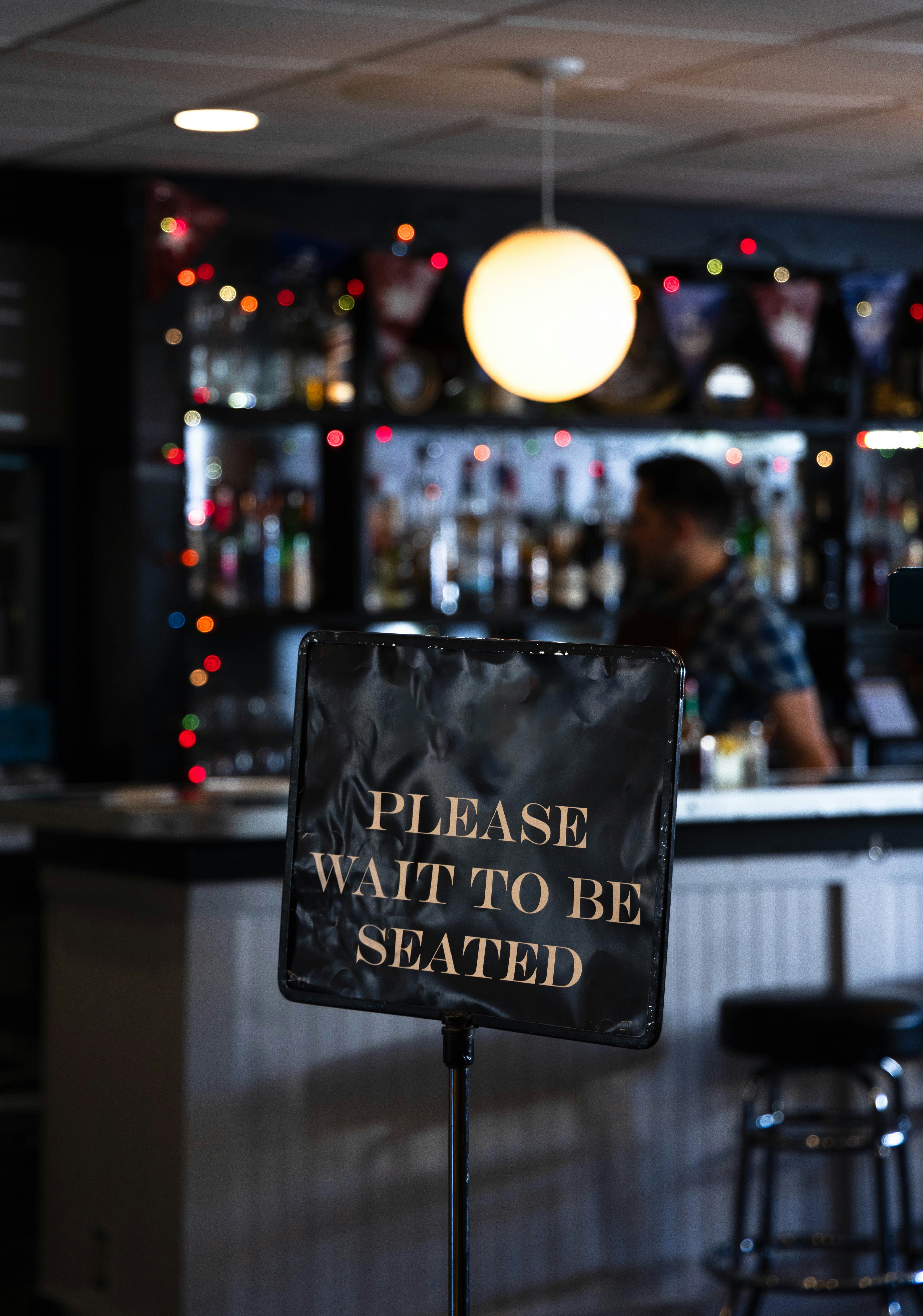
The Wait Feels Different When Someone Owns It
There will be waits.
A table may still be turning. A bartender may be finishing an order. A server may be in the middle of another conversation.
The problem is rarely the wait itself. The problem is uncertainty.
“Your table will be ready in about five minutes. Feel free to have a seat at the bar and I’ll come get you.”
That feels completely different from standing near the door wondering what is happening.
The same principle applies once guests are seated. If it will take a moment before someone can get to the table, a quick acknowledgment goes a long way. A glass of water, a menu, or even a simple “I’ll be right with you” keeps the guest connected to the experience.
People are surprisingly patient when they know what is going on.
Silence makes waits feel longer.
The Table Is Part of the Welcome
Where guests are placed also shapes those opening minutes.
A beautifully designed venue can still create an awkward first impression if the guest is seated at the least desirable table in an otherwise empty room.
People notice.
They notice when they are beside a service station, directly under a bright light, near a drafty entrance, or isolated from the rest of the room.
Sometimes those tables are unavoidable, especially on busy nights, but early in service there is often more flexibility.
The first few seating decisions can help create a room that feels active and comfortable rather than scattered.
This is where guest experience and operations overlap.
A good seating strategy is not only about rotation and sections. It is also about how the room feels from the guest’s point of view.
Small Details Become Big Signals
The first ten minutes are full of small details that tell guests what kind of place they are in.
A clean table. Polished glassware. Menus that are not sticky or worn out. Bathrooms that feel cared for. Candles that are actually lit. Music that is at the right level. A server who knows what is happening that evening.
None of these things are dramatic on their own.
Together, they create trust.
Guests begin to assume that if the small things are being handled, the bigger things probably are too. That confidence carries forward into the rest of the visit.
A guest who feels good early is more likely to forgive a small delay later. A guest who starts the experience uncertain may interpret that same delay very differently.
The first impression becomes the lens through which everything else is viewed.
Give Guests Something to Look Forward To
The opening minutes are also a chance to create anticipation.
A server mentioning a feature before handing over the menus. A bartender pointing out something new on the list. A host letting guests know there is live music later. A staff member mentioning that the patio is opening as the sun goes down.
These small pieces of information make the venue feel active and current. They remind the guest that they are not simply occupying a table. They are participating in something happening tonight.
That feeling is powerful.
Hospitality becomes more memorable when the experience feels connected to the moment.
First Impressions Are Built Before the First Order
Food, drinks, entertainment, and service will eventually take center stage. But by then, the guest has already formed an opinion. The opening minutes have told them whether the venue feels warm, confident, organized, and alive.
That does not mean every arrival has to be perfect. Hospitality is too human for that. It means the beginning should feel intentional.
Notice people when they arrive. Give them clarity if they need to wait. Pay attention to what they see when they walk in. Think about where they are seated. Keep the room moving. Make sure the team understands that the experience begins before anyone takes an order.
Because guests may come for the food, the drinks, the music, or the occasion. But before any of that happens, they decide how the place makes them feel.
And those first ten minutes can shape the entire night.