The 15-Minute Pre-Shift: How Great Restaurants Set the Tone Before the Doors Open
By Pop Reso
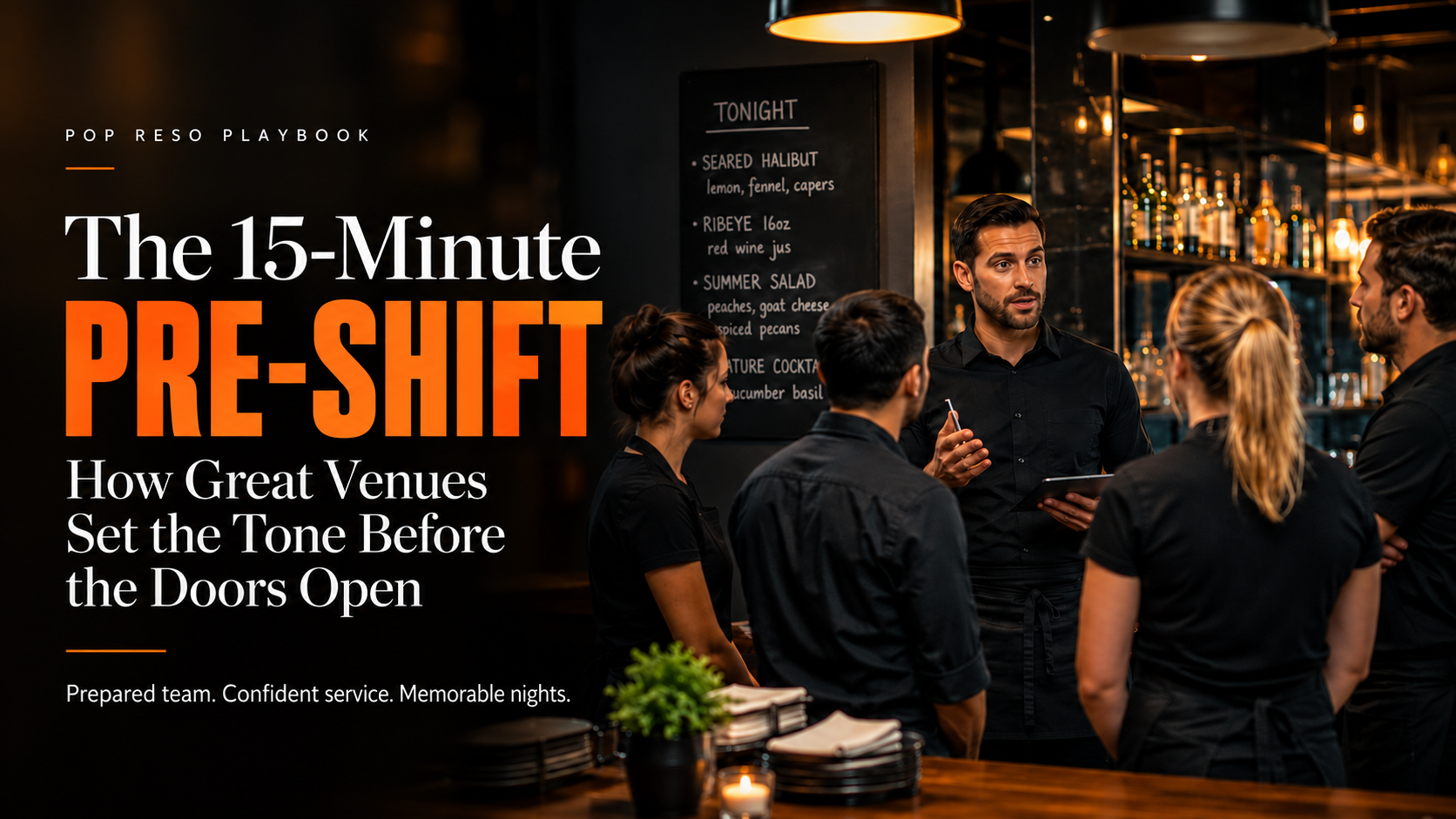
Great service rarely happens by accident. Often, it begins fifteen minutes before the doors open.
There is a particular moment in almost every restaurant before service begins. The dining room is set, the kitchen is finishing prep, bartenders are stocking their stations and servers are checking reservations while everyone mentally shifts from preparation into service.
That small window of time can be one of the most valuable parts of the entire night.
A good pre-shift meeting doesn’t need to be long, complicated or filled with corporate language. In fact, some of the best ones are remarkably simple. They tell the team what they need to know, remind everyone what matters tonight and create the feeling that the restaurant is about to enter service together rather than as a collection of individuals working separate sections.
More Than Tonight’s Specials
Many pre-shift meetings become a quick recital of information. Here’s the soup, here’s the fish feature, we’re out of the ribeye and there’s a party of twelve arriving at seven.
That information matters, but a strong pre-shift can do much more.
This is the moment to give the team context. Why is tonight’s feature interesting? What should a server know about the wine pairing? Is there an anniversary coming in? Does the large party have a tight timeline? Is somebody visiting for the first time after being referred by a regular?
When staff understand the story behind the information, they’re better equipped to create an experience around it.
A server who knows only that the chef has a halibut feature can repeat the ingredients. A server who tasted it, understands why the chef created it and knows what makes it different can actually sell it with confidence.
There is a big difference between reciting a dish and recommending one.
Get Everyone Looking at the Same Night
Every service has a personality before it even begins.
Maybe reservations are heavily stacked between six and seven. Maybe the patio is full. Maybe there is a birthday party, an anniversary, a large corporate table and three first-time guests all arriving within forty-five minutes.
If only the manager knows that, the team reacts to the night as it happens. If everyone knows it beforehand, they can prepare for it.
A pre-shift gives the room a shared picture of what is coming. Servers can anticipate where pressure points may happen, hosts know which arrivals deserve extra attention, bartenders can prepare for an early rush and managers can position themselves where they’re most likely to be needed.
Preparation doesn’t eliminate problems, but it often prevents small issues from becoming big ones.
Use the Time to Teach Something
Training doesn’t always need to happen in a classroom.
Five minutes of focused teaching every day adds up quickly. One shift might include tasting a new wine. Another might cover how to describe a particular cut of beef. The next could focus on greeting a table, handling an allergy question or explaining why walking a guest to the washroom is better than pointing across the room.
These small lessons reinforce standards without overwhelming the team.
Over time, they also create consistency. Newer employees begin learning how the restaurant thinks, while experienced employees are reminded that details still matter.
The goal isn’t to lecture people before every shift. It’s to keep hospitality top of mind before everyone becomes but
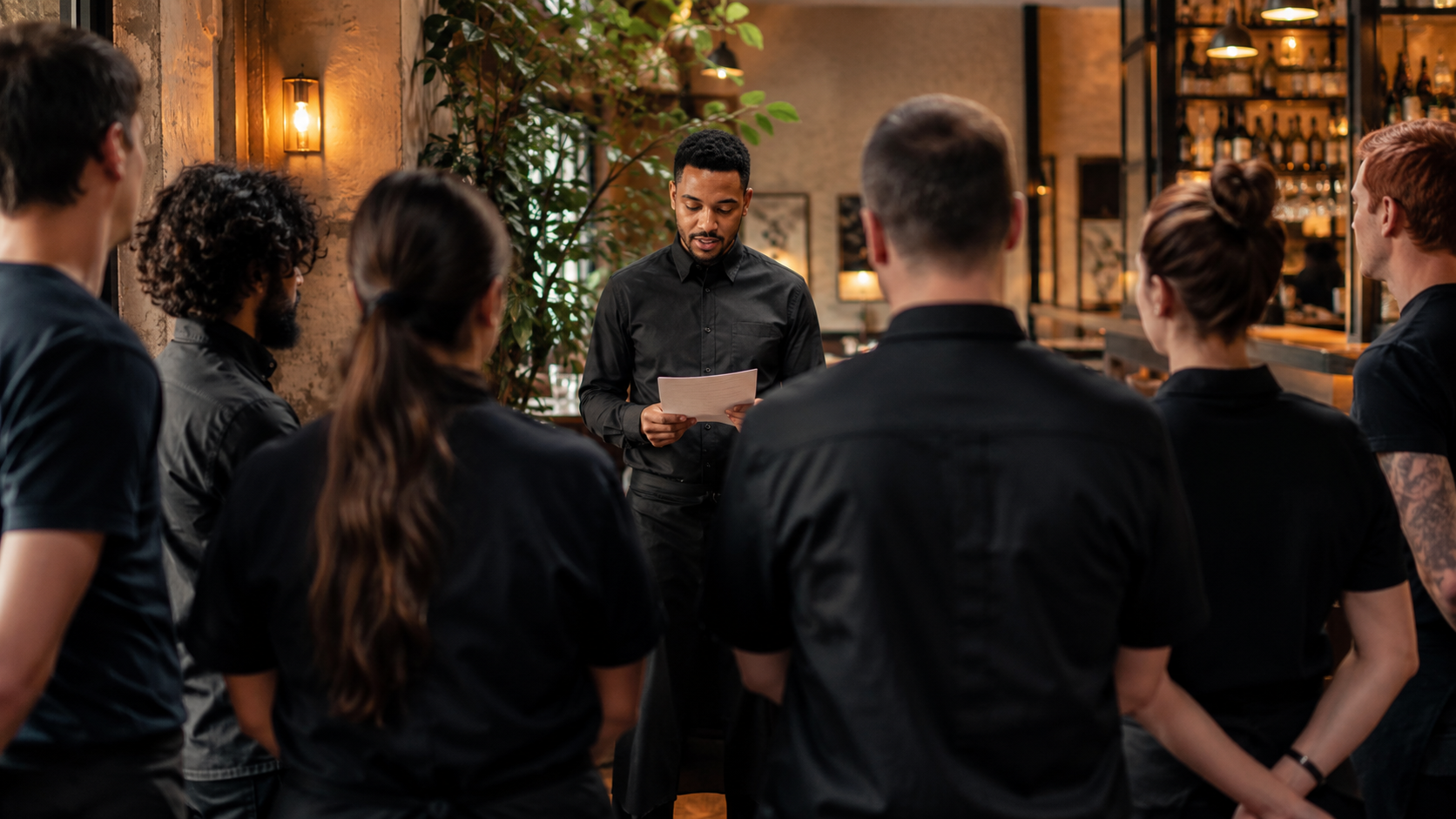
Talk About the Guests, Not Just the Numbers
Restaurants naturally focus on covers, sales, labour and average checks. Those numbers are essential to running the business, but they aren’t the reason the dining room exists.
There are people behind every reservation.
A couple may be celebrating twenty-five years together. Someone may be bringing their parents to the restaurant for the first time. A guest could be nervous about a first date. Another might simply have had a terrible day and decided they didn’t want to cook.
The team usually won’t know the full story, but remembering that every table has one changes the way service feels.
A great pre-shift can reinforce that perspective. Instead of only saying, “We have 110 covers tonight,” a manager can remind the team that there are 110 opportunities to make somebody’s evening better.
That may sound like a small distinction. On the floor, it can be enormous.
Recognition Belongs in Pre-Shift Too
Pre-shift shouldn’t only be about what needs fixing.
It is also one of the best opportunities to recognize good work while the whole team is together. Maybe a server handled a difficult situation beautifully the night before. A dishwasher stayed late to help another station. A bartender received a compliment from a guest. A cook went out of their way to accommodate an allergy.
Calling attention to those moments does more than make someone feel appreciated. It tells the rest of the team what the restaurant values.
Culture is built through repetition. If managers consistently recognize teamwork, attentiveness and genuine hospitality, employees learn that those behaviours matter.
If the only things discussed are sales numbers and mistakes, the culture will reflect that too.
Keep It Focused
A good pre-shift doesn’t need thirty talking points.
In many restaurants, fifteen minutes is more than enough. Cover the night ahead, highlight important reservations, review a feature or two, teach one useful thing and finish with a clear reminder about the standard of service expected.
The meeting should leave people more prepared, not more exhausted.
And it should feel like a conversation whenever possible. Let the team taste something. Ask a question. Have a server describe the feature. Give people the opportunity to clarify something before they’re standing at a table trying to remember it.
Those few minutes can create confidence before the pressure of service begins.
The Tone Starts Before the First Table
Guests will never see the pre-shift meeting.
They won’t know that the bartender tasted the new cocktail fifteen minutes earlier, that the host was told about their anniversary or that the server practiced describing tonight’s feature before the doors opened.
They’ll simply experience a restaurant that seems prepared.
The greeting feels confident. The staff knows the menu. Everyone appears to understand what is happening in the room. Small details are anticipated instead of constantly being corrected.
That kind of service can look effortless from the guest’s side of the table.
It rarely is.
More often, it begins with a team standing together for fifteen focused minutes before the first guest walks through the door.