Restaurant Marketing Doesn’t Have to Feel Like Marketing
By Pop Reso
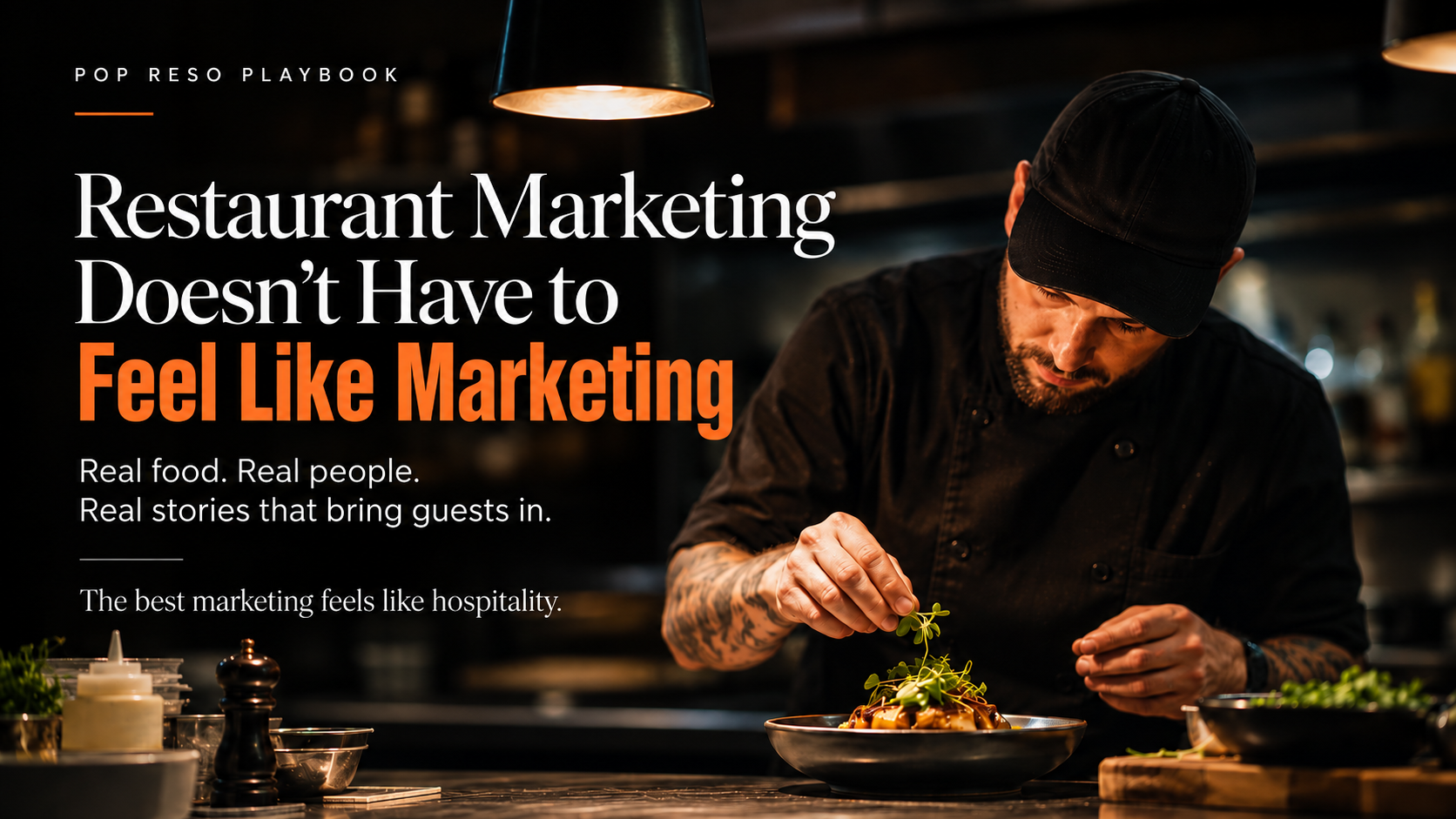
Restaurants don’t always need louder advertising. Sometimes they just need to show people what makes the place worth walking into.
For many independent restaurants, marketing can feel like one more job piled onto an already full plate. There are menus to manage, staff to schedule, suppliers to deal with, guests to look after and a hundred things happening behind the scenes before the doors even open. Then someone says the restaurant should also be posting more often, making videos, sending emails, creating promotions and figuring out whatever social platform is getting attention this month.
It’s understandable that marketing can start to feel forced. The good news is that restaurants already create interesting content every day. A chef is preparing something new, a bartender is experimenting with a cocktail, a table is being set for a special event, the patio is opening, a delivery of local produce arrives, or the room starts filling up before dinner service. The challenge isn’t always creating something to market. Often, it’s simply recognizing that the story is already happening.
Show What’s Happening, Not Just What You’re Selling
There’s a noticeable difference between a restaurant saying, “Book your table now,” and showing a chef finishing tonight’s feature while letting people know it will be available from 5 PM. One feels like an advertisement. The other feels like an invitation into what’s happening inside the restaurant.
The same is true behind the bar. Instead of constantly promoting happy-hour pricing, show the bartender building a drink, explain what inspired it and let people know they can try it that evening. Rather than simply telling people the patio is open, show the first tables being set outside on a warm afternoon. These moments give potential guests context. They help someone imagine being there, which is often much more persuasive than a graphic announcing another promotion.
Restaurant marketing works best when it feels connected to the restaurant itself. The food, the people, the room and the energy should do most of the talking.
Give People a Window Into the Restaurant
One of the advantages restaurants have over many other businesses is that there is almost always something happening behind the scenes. Prep begins hours before service. Bread is coming out of the oven, sauces are being finished, bartenders are cutting garnishes and servers are learning the evening’s features.
Most guests never see those moments.
Showing a little of that process creates personality without requiring the restaurant to manufacture a campaign. A short video of the chef explaining a dish, a photograph of the team preparing the dining room or a quick look at the first cocktail of the night can tell people more about the restaurant than another carefully designed ad.
It also puts faces behind the business. Independent restaurants are built by people, and people tend to connect with people more easily than they connect with logos.
Every Post Does Not Need To Sell Something
Not every piece of restaurant content needs an offer attached to it.
A restaurant can share a new dish because it looks great. It can introduce a staff member because they’re part of the experience. It can show a busy dining room because the atmosphere tells its own story. It can talk about an ingredient, a producer, a piece of neighbourhood history or the reason a particular menu item exists.
Those posts still have marketing value because they build familiarity. When someone eventually decides where to go for dinner, they’re more likely to think about places they recognize and understand.
That is why consistency matters more than constant promotion. A restaurant that regularly gives people a glimpse into what it does can stay present in someone’s mind without shouting at them every day.
Make the Message Useful in the Moment
There are also times when the most effective marketing is extremely simple. It’s 4:30 on a beautiful Thursday afternoon and the patio is open. The chef has a feature that will only last through dinner service. A reservation cancels and a great table becomes available. Live music starts in an hour.
That information is useful because it gives someone something they can act on immediately.
Restaurant marketing doesn’t always need to be planned three weeks in advance. Some of the most valuable communication happens in real time, when the restaurant has something worth knowing about and the guest is deciding what to do with their evening.
The key is clarity. What’s happening? When is it happening? Why might someone care? If those three things are easy to understand, the message has done its job.
Let the Restaurant Be the Marketing
The strongest restaurant brands usually feel like extensions of the actual experience. The tone online feels like the tone in the room. The photography looks like the food people really receive. The staff shown in the content are the people guests will actually meet.
That kind of authenticity builds trust.
Marketing shouldn’t require a restaurant to become something it isn’t. It should help more people understand what the restaurant already does well.
The goal isn’t to make every post feel like an advertisement. It’s to make sure that when something interesting is happening, people have a chance to see it.
Because sometimes the best restaurant marketing is simply saying:Here’s what’s happening at our place today.