Attract More Guests Without Discounting
By Pop Reso
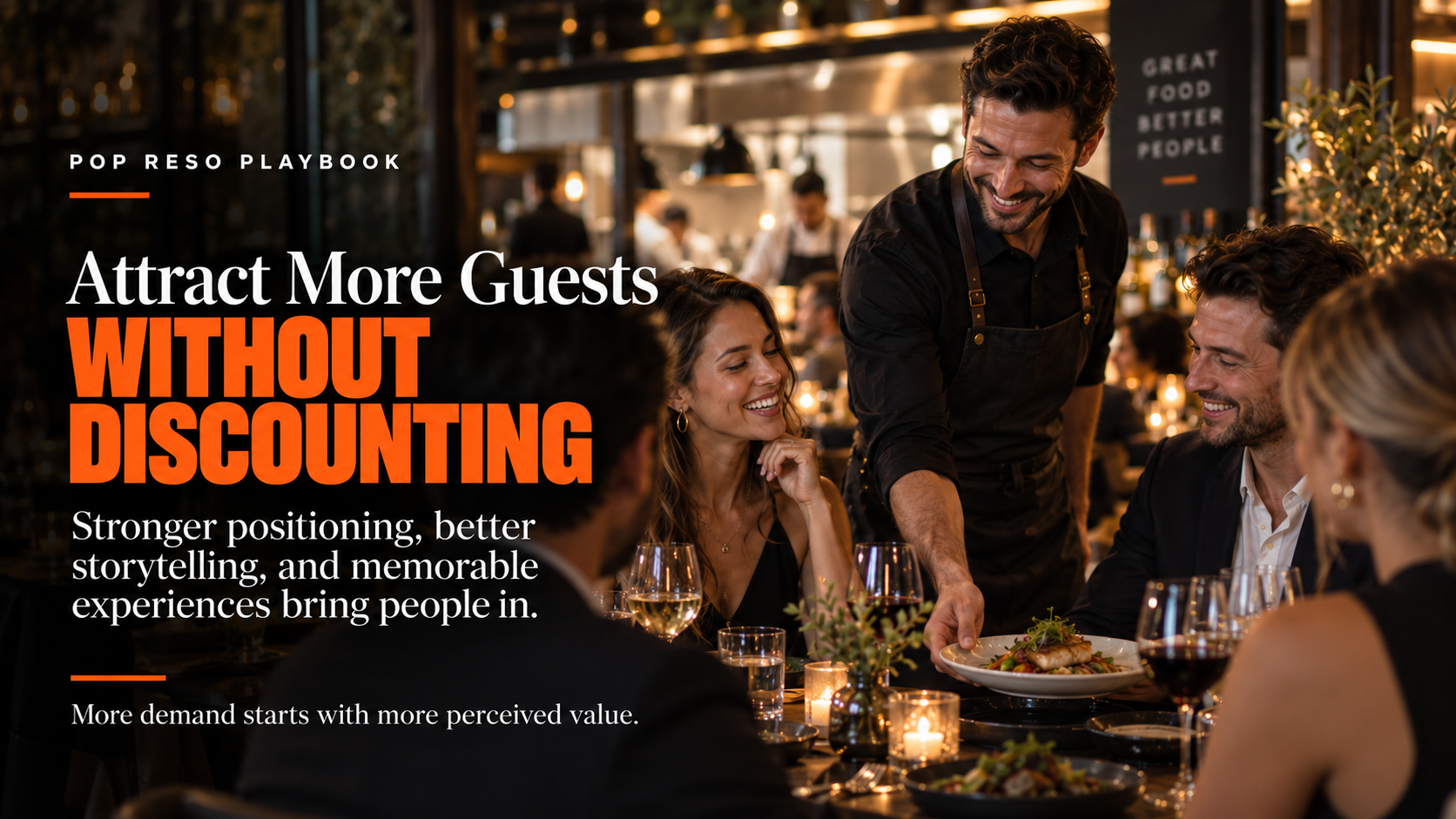
How to Fill More Restaurant Seats Without Discounting Your Menu
When a dining room is quiet, one of the first instincts is often to offer a discount. Twenty percent off, half-price appetizers, a coupon, a two-for-one promotion, those offers can work, but they can also create a habit where guests begin waiting for the next deal. For independent restaurants already working with tight margins, constantly lowering prices can become a difficult cycle to maintain.
The good news is that filling more seats doesn’t always require charging less. Sometimes the real problem is much simpler: people just don’t know what’s happening. A restaurant may already have plenty worth talking about. The chef could be running a feature that isn’t on the regular menu, the bartender may have created a new cocktail, the patio could be open on the first beautiful evening of the week, or there might be live music starting later. None of those things necessarily require a discount. They require attention.
The question every restaurant should be trying to answer is simple: why should someone choose your place tonight? That doesn’t mean reinventing the restaurant every day. Small reasons can be enough. A neighbourhood Italian restaurant might highlight a fresh pasta feature, a steakhouse could showcase a cut available only that evening, and a cocktail bar could introduce something the bartender has been experimenting with. The point is to give people something specific to notice.
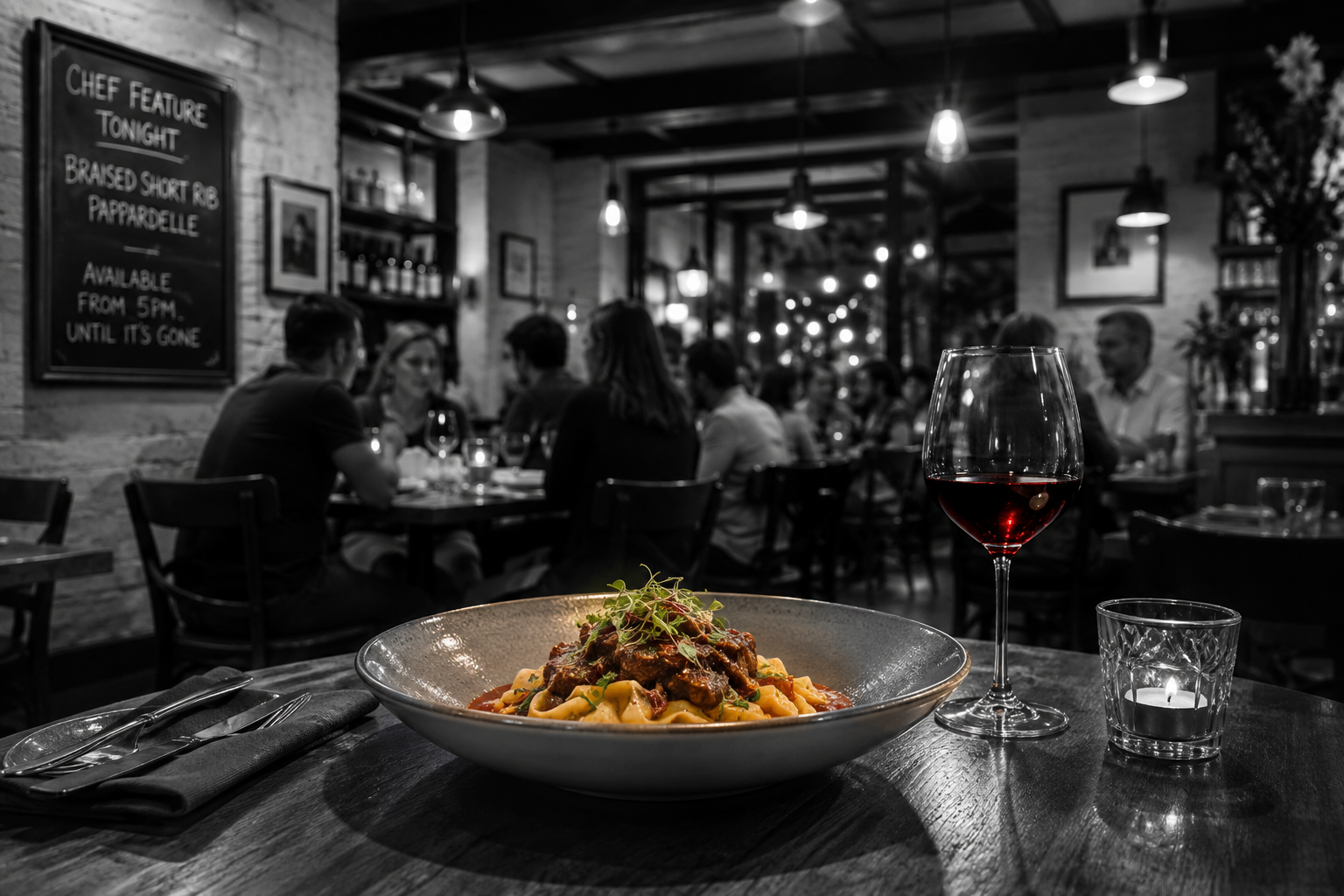
Compare the difference between saying “Come visit us for dinner tonight” and saying “Tonight only: braised short rib pappardelle, available from 5 PM until it’s gone.” The first is easy to scroll past. The second gives someone a reason to stop, pay attention and make a decision.
Create Urgency Without Cutting the Price
Restaurants naturally have something many other businesses have to manufacture: scarcity. A chef feature may only be available for one night, a special wine may only have a few bottles left, live music might start at 8 PM, or a tasting may have a limited number of seats. Those are genuine reasons for someone to make a decision now, and they don’t require lowering the price of the experience.
That changes the message from “This is cheaper now” to “This is happening now.” It also allows the restaurant to focus on something far more valuable than price: the experience itself. People don’t only go out because they’re hungry. They go out to meet friends, celebrate something, have a drink after work, go on a date, sit on a patio or simply get out of the house for a while.
That means there is far more to promote than a menu item or a discount. Show people what the room feels like. Introduce the bartender. Highlight the chef. Show the patio filling up. Talk about what’s being poured behind the bar or what’s coming out of the kitchen. Give potential guests a glimpse of what their evening could feel like if they chose your restaurant.
Give Slow Nights an Identity
If Tuesday or Wednesday is consistently quiet, the answer may not be to make it cheaper. It may be to give that night a reason to exist in someone’s mind. A recurring chef feature, wine night, live acoustic set, seasonal cocktail, tasting or limited menu item can give people something to remember and look forward to.
Over time, the night begins to develop an identity. Guests stop thinking only about the restaurant and start thinking, “Wednesday is wine night there,” or “That’s the place that does the rotating chef feature.” That kind of recognition can be much more valuable than constantly inventing another discount.
Timing also matters. A restaurant can create an incredible feature, post about it several days in advance and still have empty tables when the night arrives. Many dining decisions happen much closer to the meal itself. Someone finishes work, someone texts a friend, someone says, “Where should we go tonight?” Reaching people in that moment can be far more valuable than simply putting another promotion into the world and hoping it gets noticed.
Protect the Value of What You Do
There is nothing wrong with discounting when it’s used intentionally. Promotions can absolutely be effective, but they should be one tool, not the only tool.
Your food has value. Your staff has value. Your atmosphere has value. The experience you create has value. Before lowering the price, it’s worth asking whether the real problem is simply that enough people don’t know what’s happening.
Sometimes filling more seats isn’t about charging less. It’s about giving people a reason to walk through the door and making sure they hear about it..