Your Restaurant Has Something Happening Tonight. Does Anyone Know About It?
By Pop Reso
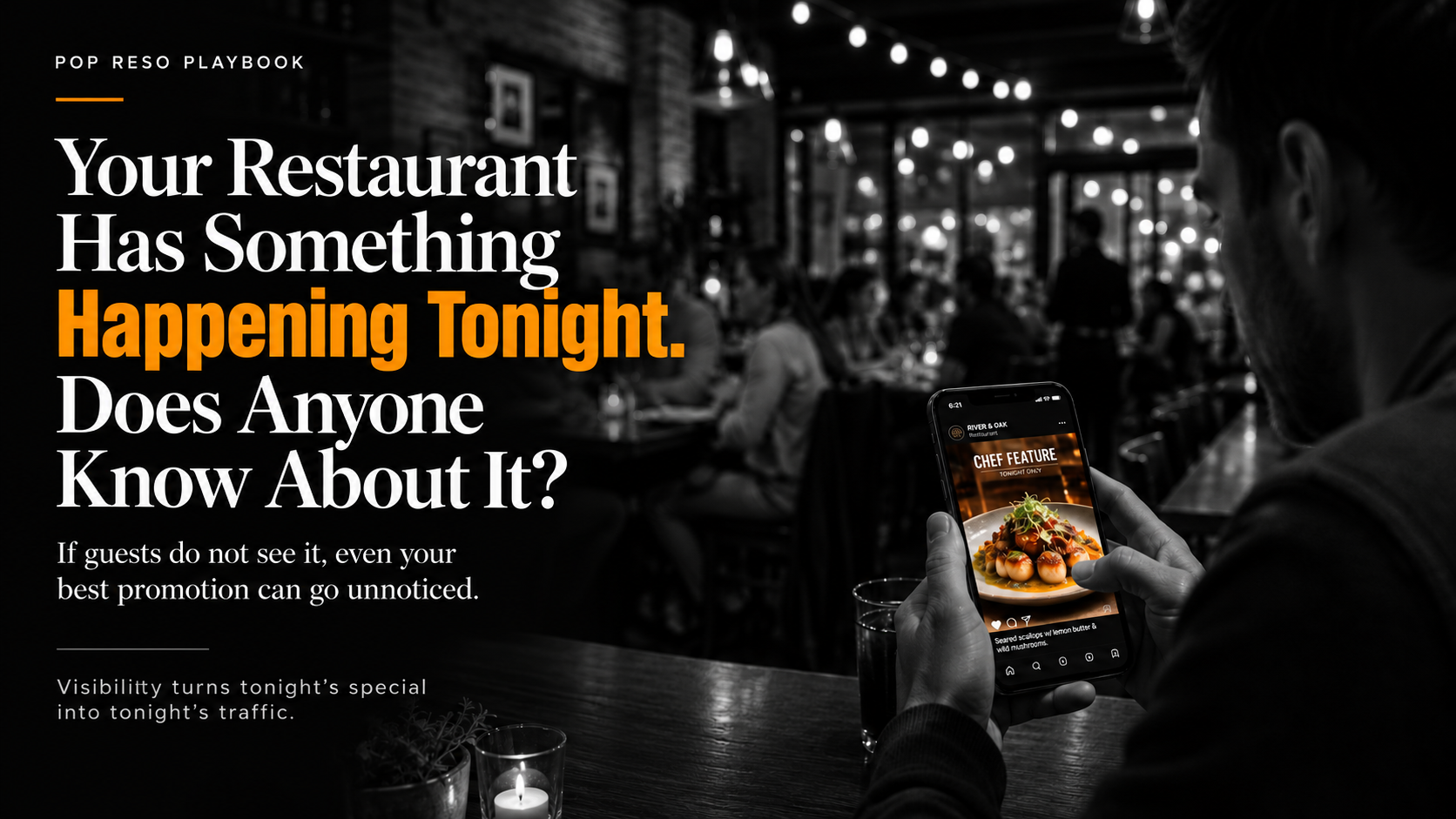
Restaurants have more ways than ever to communicate with guests, yet getting people through the front door can still feel surprisingly difficult. A restaurant can create an incredible chef feature, launch a new cocktail, book live music or open the patio for the season and still look around at 7:30 and wonder why more people didn’t show up.
Often, the problem isn’t that the offer wasn’t good enough. It’s that not enough people knew it was happening.
A restaurant might post about something on Instagram in the morning, add it to a Facebook story, mention it on the website and assume the message is out there. Technically, it is. But that doesn’t mean the people deciding where to go tonight ever saw it. Social feeds move quickly, stories disappear, websites require people to actively visit them, and even loyal followers can miss a post simply because it appeared at the wrong time.
That creates a strange situation for restaurants. They may be doing something genuinely interesting while potential guests are sitting a few blocks away asking each other, “Where should we go tonight?”
Being Visible Is Different From Being Discoverable
Posting something online makes it visible. Being discoverable means the right person can find it when they actually care.
That difference matters.
Someone scrolling social media over breakfast may notice a restaurant post and think it looks great, but by dinner they’ve seen hundreds of other pieces of content. The restaurant has been pushed out of mind. Another person may decide at 6 PM that they want to go somewhere for dinner, but unless they already follow that restaurant, visit its website or happen to search for it, they may never know what’s happening there.
For restaurants, the challenge isn’t simply creating more content. It’s making useful information easier to discover at the moment someone is deciding where to eat, drink or go out.
Give People Something Specific to Notice
“Join us tonight” is easy to overlook because it doesn’t tell the guest why tonight is different from any other night.
Specificity is far more powerful.
Instead of telling people you’re open for dinner, tell them the chef has twelve portions of a new feature available tonight. Mention that the patio is open and the weather is perfect. Tell them live music starts at eight. Show them the new cocktail the bartender just created. Let them know a tasting begins in an hour or that a few prime tables have opened up for the evening.
The restaurant doesn’t necessarily need to create something new every day. It needs to communicate what is already worth noticing.
That gives a potential guest an answer to the question that matters most: “Why should we go there tonight?”
Timing Matters More Than Most Restaurants Think
Restaurant marketing often focuses heavily on what to post, but when people see the message can be just as important.
Many restaurant decisions are spontaneous. Someone gets off work and doesn’t feel like cooking. Friends decide to meet for drinks. A couple realizes they have an unexpected free evening. Someone walks outside, notices how nice the weather is and starts thinking about a patio.
Those decisions may happen only an hour or two before someone arrives at a restaurant.
That means an amazing post from three days ago may be less useful than a simple, timely message saying what is happening right now.
Restaurants have always dealt with perishable inventory. An empty table tonight can’t be sold tomorrow. A chef feature that isn’t ordered before closing is gone. The opportunity exists for a limited window, which makes timely communication especially valuable.
Don’t Make Guests Hunt for the Information
One of the biggest frustrations for diners is how scattered restaurant information can be.
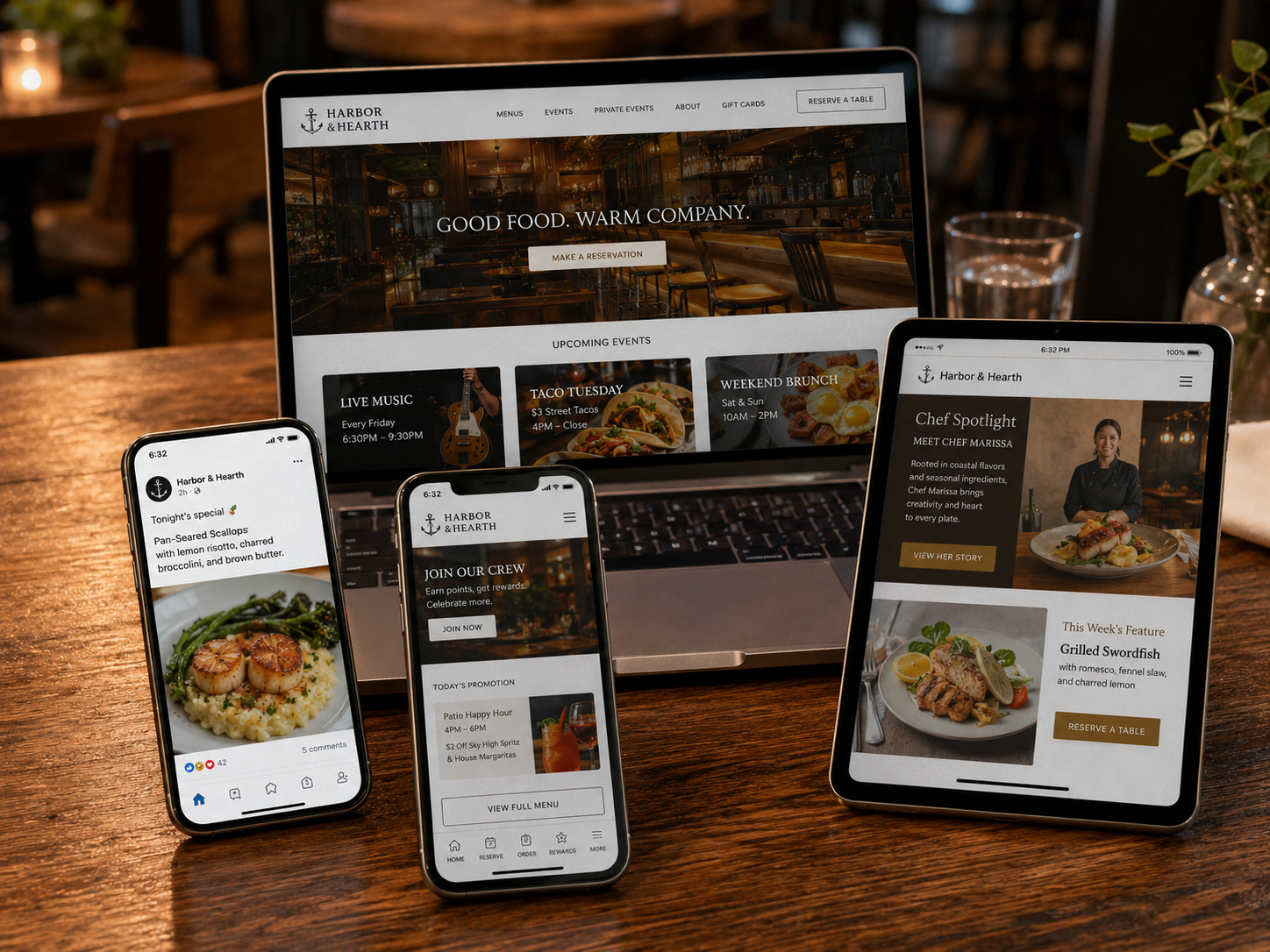
The menu is on the website. Tonight’s feature is on Instagram. Live music was announced on Facebook. Patio information is buried in a story. Hours are somewhere else. A special event may only exist in a post from last week.
A motivated guest might piece everything together, but most people won’t.
The easier a restaurant makes it for someone to understand what is happening, the better chance it has of turning interest into a visit. That means clear information, timely updates and fewer steps between discovering something interesting and deciding to go.
The goal isn’t to make people work harder to find your restaurant. It’s to remove as much friction as possible.
The Opportunity Is Already There
Restaurants don’t always need another promotion, another discount or another complicated marketing campaign. In many cases, they already have something worth talking about.
The chef is creating. The bartender is experimenting. The patio is open. The room has atmosphere. Something is happening tonight.
The challenge is making sure people know about it while they still have time to walk through the door.
Because great experiences don’t help fill a dining room if nobody knows they’re happening.